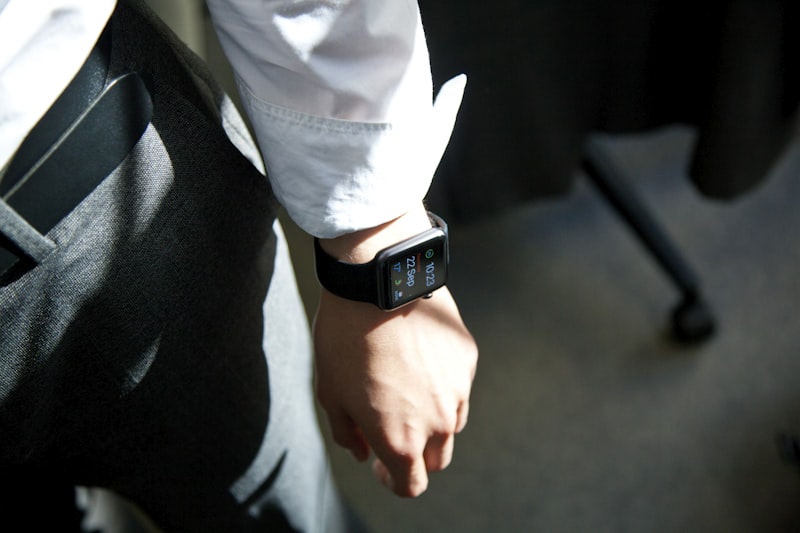
Apple's commitment to health monitoring has evolved from gimmick to serious medical device functionality. The Apple Watch Series 12 introduces blood pressure trend monitoring through advanced optical sensors, representing a breakthrough that provides users with clinically relevant health insights previously unavailable in smartwatch form factors.
Blood pressure measurement via optical sensors represents significant engineering achievement. The Apple Watch uses multiple optical wavelengths to measure blood vessel response to pressure changes, enabling non-invasive blood pressure trend analysis. The 30-day rolling analysis provides trends that are more clinically relevant than single-point measurements.
The blood pressure feature works by measuring subtle changes in photoplethysmography signals across the wrist. Machine learning algorithms trained on millions of measurements enable the device to calculate relative blood pressure trends without requiring calibration against traditional blood pressure cuffs for absolute values. This approach provides valuable trend data while avoiding regulatory complexity of claiming absolute measurements.
Enhanced sleep tracking with stricter metrics provides more accurate sleep quality assessment. The Apple Watch now distinguishes between light sleep, deep sleep, and REM sleep with improved accuracy. Integration with health apps provides detailed insights into sleep patterns, enabling users to optimize sleep hygiene based on personalized feedback.
Stress detection alerts notify users when stress levels reach unhealthy thresholds. The Watch uses heart rate variability, activity patterns, and environmental factors to assess stress levels. When stress is detected, the Watch suggests guided breathing exercises or recommends breaks from work, providing actionable interventions.
The rumored sensor count doubling suggests Apple is considering additional measurements like body temperature, hydration status, or other physiological parameters. These expanded capabilities would further position the Apple Watch as a comprehensive health platform that monitors multiple physiological systems simultaneously.
Health data privacy remains paramount. All health data remains encrypted on the device, with only processed trends transmitted to iCloud if the user enables backup. Users maintain complete control over which health features are active and how data is used.
The Apple Watch ecosystem has attracted major healthcare institutions and insurance providers considering integrating Apple Watch health data into clinical workflows. Some insurers are even offering discounts for Apple Watch users who maintain healthy activity levels, creating financial incentives for adoption.
Series 12's design evolution reportedly involves significant visual changes beyond incremental updates. Apple may introduce new materials, display technologies, or form factors designed specifically around health monitoring capabilities, making the visual experience more integral to the health-tracking functionality.
Competitive advantages from Apple Watch health features create powerful ecosystem lock-in. Users accustomed to Apple Watch health insights become reluctant to switch to alternative smartwatches lacking equivalent capabilities, strengthening Apple's wearables business and encouraging cross-ecosystem purchases.
Regulatory pathways are becoming clearer for smartwatch health features, enabling Apple to introduce more advanced capabilities without requiring FDA approval as medical devices. This regulatory clarity accelerates innovation in health monitoring features across the industry.
The Apple Watch's evolution from fitness tracker to comprehensive health platform demonstrates Apple's ability to identify emerging needs and develop technologies that address them. The Series 12 health capabilities position the Apple Watch as potentially the most important health device that average people own, surpassing dedicated health monitors in functionality and convenience.