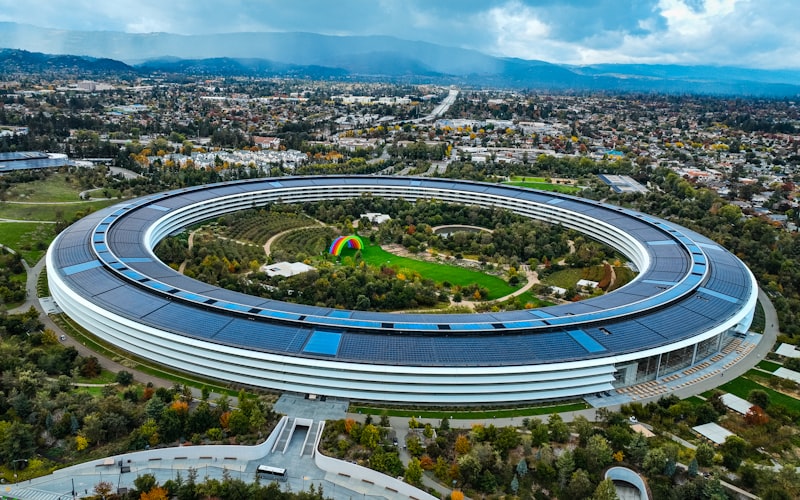
In 1976, Steve Jobs, Steve Wozniak, and Ronald Wayne founded Apple Computer in a garage, with nothing but ambition and a vision of personal computing. Five decades later, on April 1, 2026, the company celebrated becoming not just a corporation, but a cultural institution that has shaped the lives of billions.
The journey from garage to greatness was marked by defining moments that pushed the boundaries of what technology could achieve. The Apple II revolutionized personal computing by bringing computers into homes worldwide. The Macintosh introduced the graphical user interface to the masses, transforming computing from arcane to intuitive. The iPod didn't just create a new product category—it fundamentally changed how the world consumed music and digital content.
Apple's impact extends far beyond hardware. The company's ecosystem philosophy—seamlessly connecting iPhone, iPad, Mac, Apple Watch, and services—created an entirely new standard for user experience. This integration became the gold standard that competitors still struggle to match.
The App Store, launched in 2008, created an entirely new economic model for software distribution and spawned countless developers and entrepreneurs. Services revenue now exceeds $30 billion annually, proving that Apple's influence transcends physical products and encompasses digital experiences and financial services.
Through five decades, Apple maintained an unwavering commitment to design excellence. Every product, from the earliest Macintosh to the latest M5-powered machines, bears the signature of meticulous attention to detail, elegant simplicity, and functional beauty. Tim Cook, who took the helm in 2011, has continued this legacy while expanding Apple's environmental commitments and social responsibility programs.
The company's 50th anniversary celebrations were marked by surprise performances from artists spanning the decades of Apple's existence, special events worldwide, and a grand finale celebration at Apple Park in Cupertino. Employees from across the globe gathered to honor five decades of innovation and the millions of customers whose loyalty made this milestone possible.
Today, with over 2.5 billion active devices worldwide and a market capitalization exceeding $3 trillion, Apple stands as the most valuable publicly traded company in history. The installed base of users creates a powerful ecosystem that continues to drive innovation in artificial intelligence, health technology, spatial computing, and beyond.
Looking toward the next chapter, Apple faces new frontiers in AI integration, wearable health technology, foldable devices, and immersive spatial computing experiences. The company's strategy emphasizes privacy-first computing, on-device processing, and responsible AI deployment—values that remain true to its foundational principles of putting the user first.
Apple's first 50 years established the company as not merely a manufacturer of electronic devices, but as a cultural force that elevated design, computing, and human experience. As the company enters its next era, the question isn't whether Apple will continue innovating—it's how the world will change in response.